
Kolmeo Inspections
End-to-end UX Research for property inspections from a blank page
Intro
Overview
Kolmeo is a property management software for property managers, by property managers, to help better service owners while keeping the needs of tenants in mind.
Challenge
Problem Space
Building entirely afresh from a legacy system whose server was being turned into a carpark, there was no existing app. This meant the problem space had to be crafted primarily from understanding the Property Managers (PMs) experience.
Our green fields interviews fast made it clear what we needed to focus on first, a process that bookends every lease: conducting an end-to-end inspection. This required interviews conducted over many weeks as we slowly detangled the interconnectedness of scheduling, owner/tenant/PM communication, movement of images and information, and the breadth of feelings in different bits of the process. Once the problem space revealed itself then we could start scoping from there.
What is an Inspection?
An inspection for a property is when photos are taken of the property to prove its condition, usually done by a property manager. Notes are added and the report is sent to the owner and any maintenance required is logged.
My Role & Contributions
- Product Strategy
- Shaped product direction with PM, defined core workflows
- Design System
- Built component library for a consistent experience
- User Research
- Conducted interviews & workshops that informed final product decisions (shared with PM)
- Prototyping & User Testing
- Tested prototypes with users for fast feedback
Process
-
Understand the Problem Space -
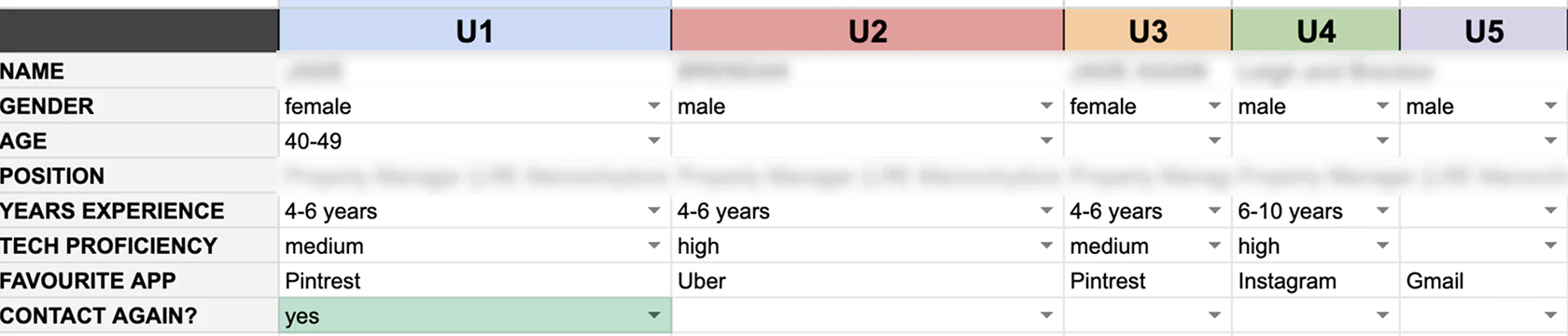
To understand the problem we conducted 12 user interviews over 3 weeks.
-
Develop Scope & Craft Design -
From the interview findings - scope product roadmap and begin designs.
Insight #1: Information is stored across many platforms
PMs were consistently context switching between platforms and methods of communication, combing through tables like a detective finding all the bits of information they need to form a case. An inspection could involve email, phone calls, google maps, calendars, with a few platforms peppered in between.
Insight #2: Owner wants involvement to be minimal
Owners generally trust and enlist PMs to take on the managerial mental load for them, insofar, they want to know as little about the goings on in their home as possible.
Defining the Problem Space
-
1. A single source of truth for PM -
Information is coming at all angles and is maintained over many programs, there is lots of double handling.
-
2. Focus on PM & Tenant experience -
Owners simply wanted as much of a hands off experience as possible.
-
3. Need to understand inspection journey -
Defining the inspection journey and how it is experienced from owner & tenant was integral to shape the scope.
User Journey & Jobs to be Done
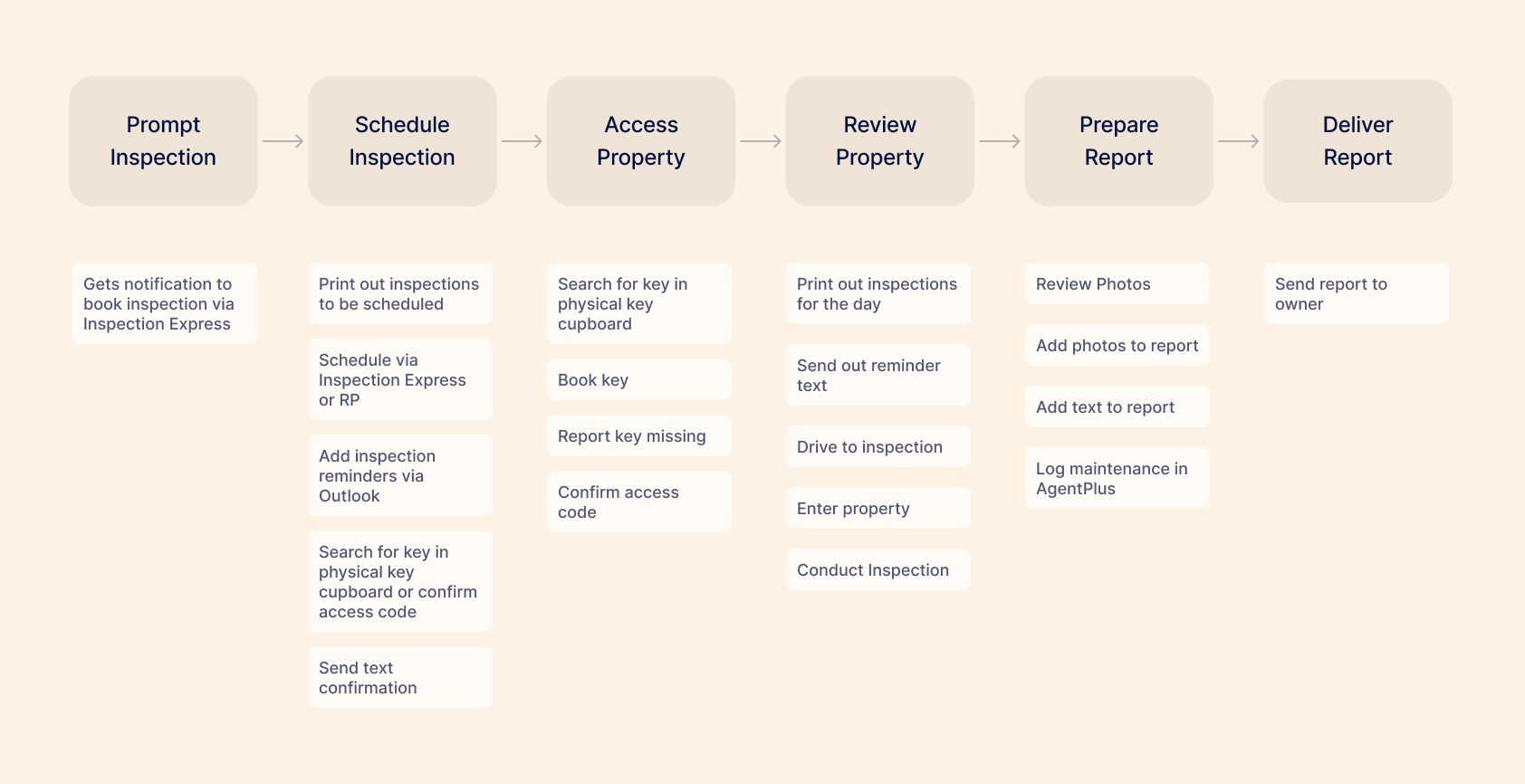
This user journey was the result of many interviews with property managers, which then formed the basis of scope of the feature. We also made it general enough that it followed the tenant's journey on the receiving end, which would make the feature more seamless when the tenant-facing side was built. This covered three types of inspection: Entry & Exit, Routine, Ad Hoc.
Empathy Mapping
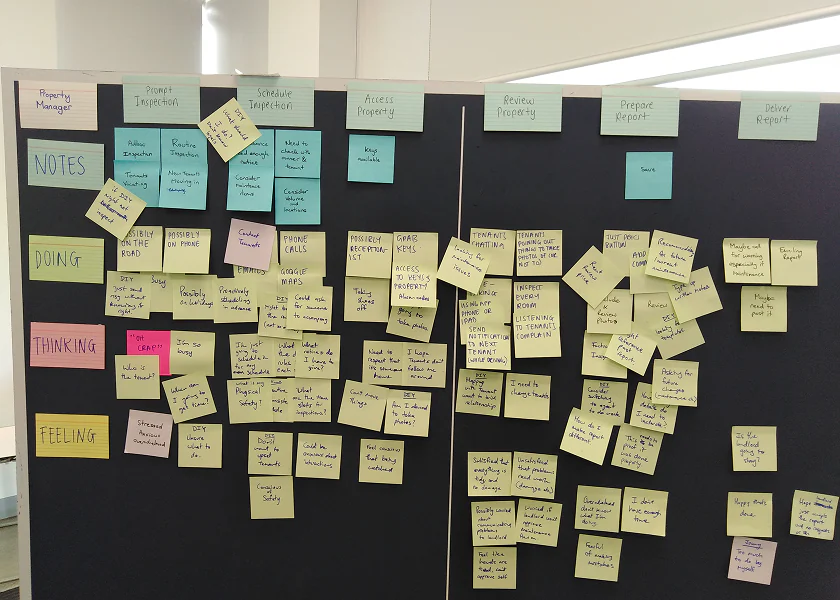
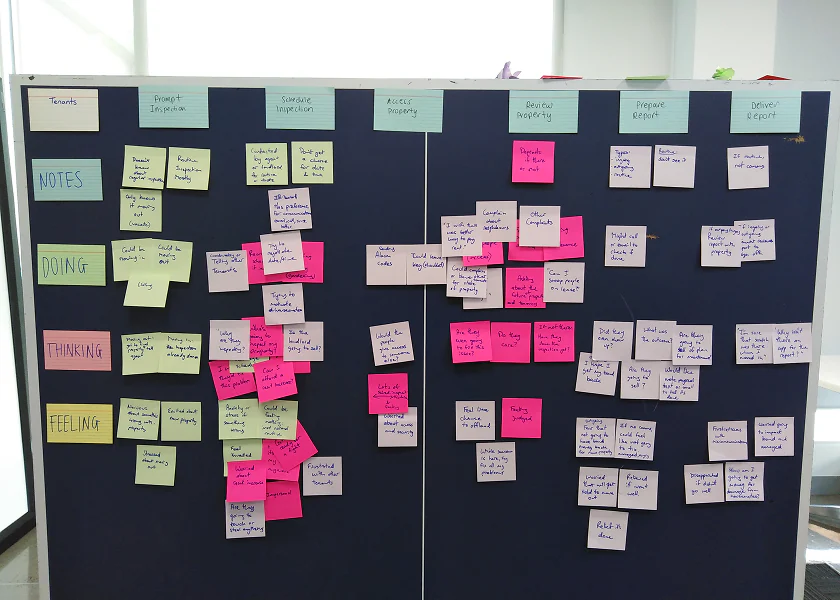
We then took this user flow and used it as the basis for our empathy map. As many of the people within the company used to be agents & tenants, we conducted an empathy map workshop with those SMEs and held a post-it note session.
Empathy Map Insights
-
1. A healthy PM & Tenant relationship is optimal -
Owners want the highlight reel-when something truly needs maintenance, records of rent paid, balance remaining on account. Most of these factors hinge on the tenant & PM communicating effectively.
-
2. There's no transparency between PM & Tenant -
Lack of info transparency resulted in poor trust and anxiety between both the PM & Tenant, especially when it came to conducting the inspection.
-
3. Avenues of communication are messy -
Over the course of the user journey, comms would happen over phone call or email, and there was no one source of truth that both the tenant and PM could access.
Usability Workshops
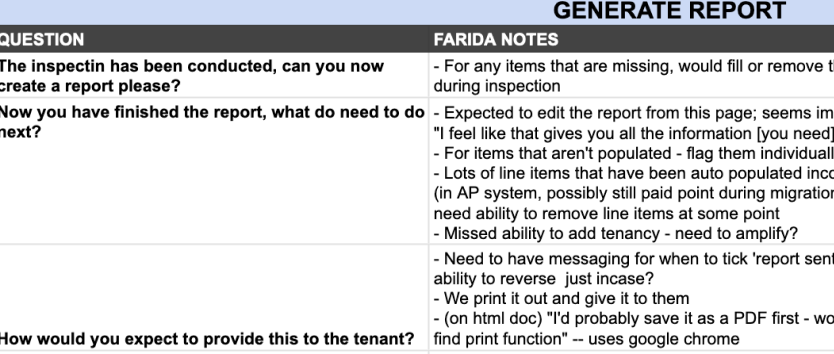
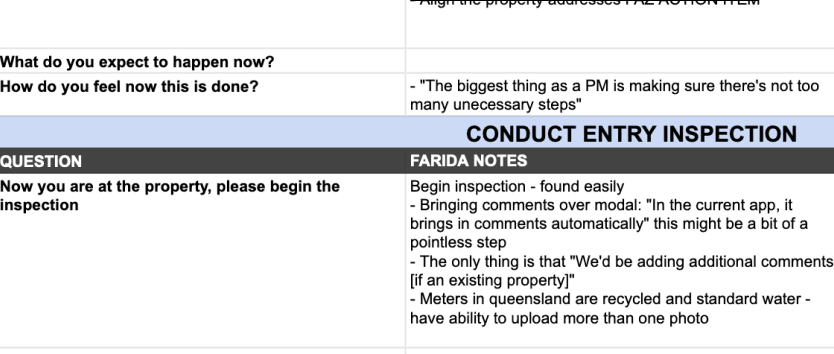
Once the flow was finalised, I turned designs into prototypes and conducted usability testing in person, and then eventually remote when covid hit.
Insights
- CTAs were easy to find
- There was functionality that PMs wanted from the legacy platform that we could bring in (ie comments from old inspections)
- There were some blind spots in the design in terms of when a step was completed, or still needed info to complete
Results
- A consistent view that is shared between the tenant and the PM - PMs, Tenants and owners could see if an inspection was Pending, In progress, Completed and what step of the Inspection it was at
- Eliminated the need for manual status update emails for the majority of inspection queries
- PMs reported higher confidence entering flagged properties
Conclusion
Overview
At the end we were able to lay out an end-to-end flow for Property Managers while designing the tenant experience in tandem, to make sure flows would not be out of date and to minimise design/dev handover time in the future.