
Zeller POS Lite
A point of sale across web, app and terminal in 3 months
Intro
Overview
Zeller is a fintech startup that offers financial services & payment solutions for businesses.
What is a Point of Sale?
A Point of Sale (POS) product is a system used by businesses to process sales transactions, manage inventory, track customer interactions, and handle payment processing.
Challenge
This was to become Zeller’s flagship product as it was falling behind its competitors without one, with an MVP that had to be designed in 3 months across web responsive, mobile app, and existing terminal with tablet considerations. Other considerations included:
- The terminal (android) and mobile app (react) had different design systems
- There was a pre-existing Items feature that had to be uplifted to suit the new POS landscape
- Time crunch meant that we had to scope the product alongside design
- Our to-be customers were most likely already using a POS system so it had to be familiar enough to use while still maintaining the Zeller brand
My Role & Contributions
- Design System Creation
- Created a DS for POS Lite that played nice with the existing design systems for App, Web & Terminal
- Desktop Research
- Personas, Journey Mapping and Competitor Analysis using input from internal SMEs
- Multi Platform & Device
- Liaised with Dev Teams to create an ecosystem that played nice & could ship fast without repeating elements
- Iterative Design
- Liaised with C-Suite to come to final designs and locking down semantics/labelling
- Interaction Design
- Provided options for interaction design
Outcomes
Key Results
- Shipped MVP across web, app, and terminal in 3 months
- 2.5 million transactions made in the first year
- Launched together with their newest flagship hardware, T1x
Process
-
From our research and constraints combined, we asked the question:
How might we create a POS System that
- feels familiar
- stands out with the Zeller brand stamp and
- is scoped enough to be sufficiently featured at launch?
Main objectives
- Understand how our main competitors are presenting information
- Understand the core flows to make it easy for pre-existing POS businesses to transition to our product
- Is there common terminology?
Creating a fully featured MVP in three months
The brief was vague and the goalposts ever moving, so we locked down the 3 main flows that would form the foundation of the item intricacies that lie beyond. Research was mostly internal:
- Competitor analysis told us what terminology to use and which flows to stick to to maintain familiarity
- Internal design sessions with the design team refined the thinking behind the design choices
- Product Managers would inform us of what was possible from a feature and technical view while keeping all the chaos contained

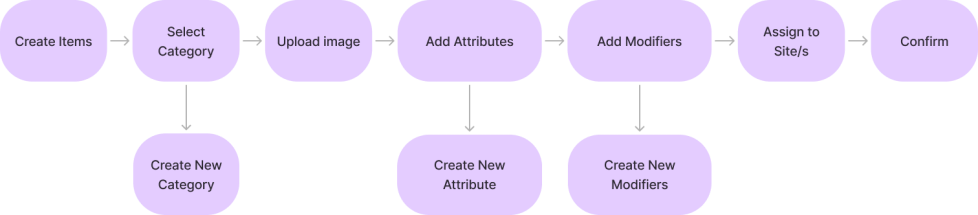
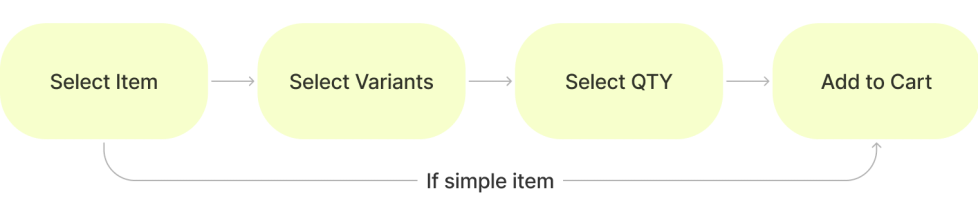
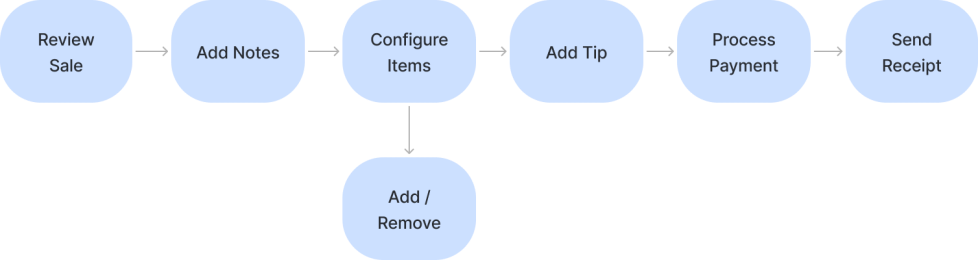
What was omitted
- Image slideshow: Descoped until after launch, as a slideshow added compounding complexity with image resizing and storage
- Discounts & Service Charges: This came immediately after launch as we could bootstrap existing logic however was not a priority compared to Variants & Attributes
- Sale Notes: Customers had asked for this feature and we initially descoped, soon adding it in.
What was prioritised
- Tile category colours & states: This was the most important thing to get right, as it would be high touch point for users
- Descriptions: this was an easy win as it came from our current Items feature
- Variants & Attributes: we considered leaving these out since it was such a big effort but found our current customers used these in their current POS setups and was a must have
These are a slice of the decisions and were made by the PM and I in the duration of the research/design process.
Structural Entropy
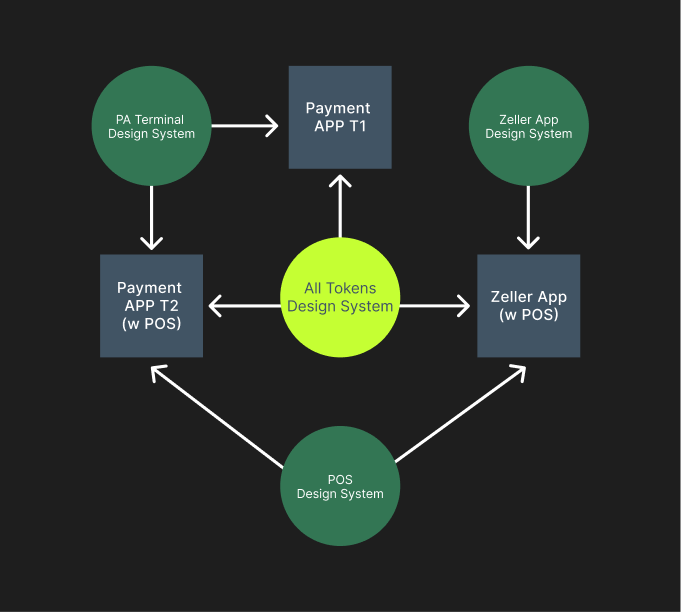
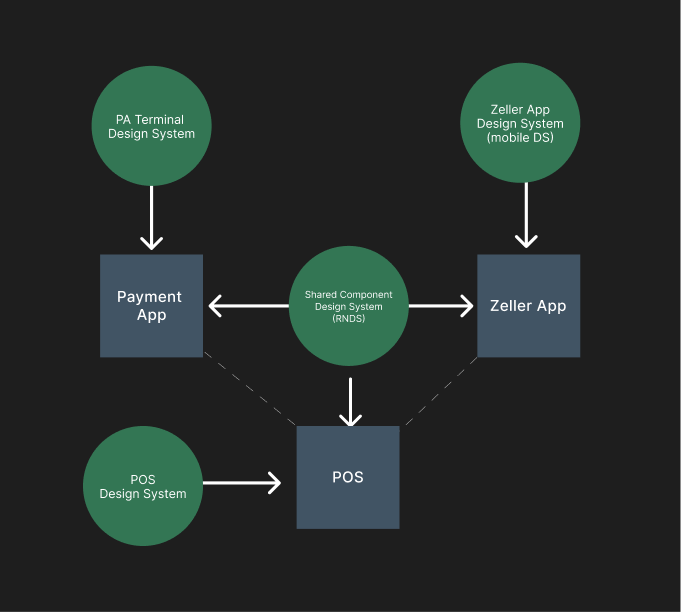
The other issue was handling all the moving parts from a structural standpoint in both design systems and within the codebase. Many approaches were considered, but ultimately the one that made the most sense was to lean on existing design systems for their respective platforms (App DS for POS on App, Payment DS for POS on terminal) and then create a new POS design system for new components that were POS-specific only, shared between the platforms. This achieved familiarity across all platforms, siloed everything nicely, and could be maintained within the 3 month deadline and beyond.
Results
Scoping as you go
Not having a defined MVP roadmap meant that we could explore what was truly necessary. Finding the balance was tricky but doable, the result is POS currently sits across all 3 platforms seamlessly.
Conclusion
Lessons Learnt
- One design system to rule them all: This began a conversation to merge all the design systems and have each component log the different devices on the same page as the friction created from multiple design systems slowed processes down.
- Dream big, scale down: Having to scope the whole product while designing made descoping decisions really clear and helped set the roadmap once launched.
- Lean on SME’s, C-Suite and Internal Stakeholders while timing is tight: I have endless gratitude for the people in my team as I constantly broke out of the silo to ask incessant questions to Customer Success, Marketing, Devs and Designers alike.